Understanding basic accounting terminology can help small-business owners make informed financial decisions, communicate more effectively with their accountants, and avoid costly mistakes. Below are 50 important terms that can help business owners better understand their finances and recognize when they may benefit from professional small-business accounting support.
Financial Statements and Reports
- Balance Sheet
A balance sheet provides a snapshot of a company’s financial position at a specific point in time. It lists the business’s assets, liabilities, and owner’s equity according to the formula: Assets = Liabilities + Equity.
- Income Statement
An income statement summarizes a company’s revenue, expenses, and profit or loss during a particular period. It is also commonly called a profit and loss statement or P&L.
- Cash Flow Statement
A cash flow statement tracks the money entering and leaving a business. It separates cash activity into operating, investing, and financing activities, helping owners determine whether the company can meet its financial obligations.
- Profit and Loss Statement
A profit and loss statement shows whether a business generated a profit or experienced a loss over a given period. It compares revenue with the expenses incurred to earn that revenue.
- Statement of Owner’s Equity
A statement of owner’s equity shows how the owner’s financial interest in the business changed during a specific period. Changes may result from profits, losses, owner contributions, or withdrawals.
Bookkeeping and Accounting Methods
- Bookkeeping
Bookkeeping is the process of recording and organizing a business’s financial transactions. Accurate bookkeeping provides the financial information needed for tax preparation, budgeting, reporting, and decision-making.
- Accounting
Accounting involves interpreting, analyzing, summarizing, and reporting financial information. While bookkeeping focuses on recording transactions, accounting uses those records to evaluate the company’s financial performance and position. Businesses that need ongoing help with these responsibilities may benefit from professional outsourced accounting services.
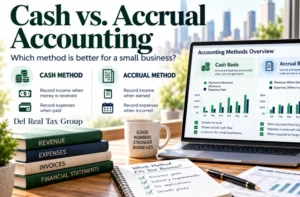
- Cash-Basis Accounting
Under cash-basis accounting, revenue is recorded when payment is received and expenses are recorded when they are paid. This method is generally simpler, but it may not provide a complete picture of future income and financial obligations.
- Accrual Accounting
Accrual accounting records revenue when it is earned and expenses when they are incurred, regardless of when money changes hands. This method often provides a more accurate view of a company’s financial performance.
- Chart of Accounts
A chart of accounts is an organized list of the categories a business uses to record financial transactions. Common categories include revenue, payroll, rent, advertising, equipment, accounts receivable, and accounts payable.
- General Ledger
The general ledger is the primary record containing all of a business’s financial transactions. The information in the ledger is used to prepare financial statements and other accounting reports.
- Journal Entry
A journal entry records a financial transaction in the company’s accounting system. Each entry generally includes the affected accounts, the transaction date, and corresponding debit and credit amounts.
- Double-Entry Accounting
Double-entry accounting records every transaction in at least two accounts using debits and credits. This system helps keep the accounting equation balanced and makes it easier to identify errors.
- Account Reconciliation
Account reconciliation involves comparing a company’s accounting records with an outside document, such as a bank or credit card statement. Regular reconciliation helps uncover duplicate transactions, missing entries, bank errors, and possible fraud.
- Fiscal Year
A fiscal year is a 12-month period a business uses for accounting and financial reporting. It may follow the calendar year or end during a different month, depending on the company’s reporting needs.
Revenue, Expenses, and Profitability
- Revenue
Revenue is the income a business earns from selling products or providing services before expenses are deducted. It is sometimes called sales, gross revenue, or top-line revenue.
- Gross Profit
Gross profit is revenue minus the direct costs of producing the goods or services sold. It helps business owners evaluate how efficiently the company delivers its products or services.
- Net Profit
Net profit is the amount remaining after all business expenses, interest, and applicable taxes are deducted from revenue. It is often referred to as net income or the bottom line.
- Gross Profit Margin
Gross profit margin measures the percentage of revenue remaining after subtracting the cost of goods sold. It is calculated by dividing gross profit by revenue and multiplying the result by 100.
- Net Profit Margin
Net profit margin measures how much of every dollar in revenue becomes profit after all expenses are paid. A higher margin generally indicates that the business is controlling its costs effectively.
- Operating Expenses
Operating expenses are the ongoing costs of running a business that are not directly tied to producing a product. Examples include rent, administrative payroll, office supplies, utilities, insurance, and marketing.
- Cost of Goods Sold
Cost of goods sold, or COGS, represents the direct costs associated with producing the goods a business sells. It may include materials, inventory purchases, direct labor, and certain production costs.
- Fixed Costs
Fixed costs generally remain the same regardless of how much a business sells or produces. Examples may include rent, insurance premiums, software subscriptions, and certain salaried positions.
- Variable Costs
Variable costs increase or decrease based on the company’s level of production or sales. Examples may include materials, shipping expenses, sales commissions, and transaction-processing fees.
- Break-Even Point
The break-even point is the sales level at which total revenue equals total expenses. Once a business moves beyond this point, additional sales may begin generating a profit.
- Budget
A budget is a financial plan estimating a company’s expected revenue and expenses over a specific period. Comparing actual results with the budget can help owners identify overspending, revenue shortfalls, and changing business conditions. Professional financial coaching for businesses can also help owners create realistic budgets and use them to guide important decisions.
- Financial Forecast
A financial forecast estimates a business’s future revenue, expenses, cash flow, and financial position. Unlike a fixed budget, a forecast is often updated as actual results and business conditions change.
Assets, Liabilities, and Equity
- Assets
Assets are resources owned or controlled by a business that have economic value. Examples include cash, inventory, equipment, vehicles, property, and money owed by customers.
- Current Assets
Current assets are assets expected to be converted into cash, sold, or used within one year. Examples include cash, inventory, prepaid expenses, and accounts receivable.
- Fixed Assets
Fixed assets are long-term physical resources used to operate a business. Buildings, machinery, computers, furniture, and company vehicles are common examples.
- Liabilities
Liabilities are debts and financial obligations a business owes to another party. They may include loans, credit card balances, unpaid bills, payroll obligations, and taxes owed.
- Current Liabilities
Current liabilities are financial obligations generally due within one year. Examples include accounts payable, short-term loans, credit card balances, payroll taxes, and upcoming loan payments.
- Owner’s Equity
Owner’s equity represents the owner’s financial interest in the business after liabilities are subtracted from assets. Equity can increase through profits and owner contributions and decrease through losses and withdrawals.
- Working Capital
Working capital is calculated by subtracting current liabilities from current assets. Positive working capital generally indicates that a business has enough short-term resources to cover its upcoming obligations.
- Inventory
Inventory consists of products, materials, or goods a business holds for sale or production. Accurate inventory tracking is important because inventory affects cash flow, cost of goods sold, profitability, and tax reporting.
- Depreciation
Depreciation spreads the cost of a qualifying long-term asset across its estimated useful life. Instead of recording the asset’s full cost as an immediate expense, the business may deduct portions of the cost over time, subject to applicable tax and accounting rules.
- Amortization
Amortization generally allocates the cost of an intangible asset over its useful life. It may apply to assets such as patents, copyrights, trademarks, and certain organizational costs.
Payments, Receivables, and Cash Flow
- Accounts Receivable
Accounts receivable is money customers owe a business for products or services already delivered. Monitoring receivables helps a company collect payments promptly and maintain healthy cash flow.
- Accounts Payable
Accounts payable represents amounts a business owes vendors or suppliers for purchases made on credit. Tracking these obligations helps prevent late payments, penalties, and damaged vendor relationships.
- Cash Flow
Cash flow is the movement of money into and out of a business. A profitable company can still experience financial trouble if customer payments arrive too slowly to cover payroll, rent, taxes, and other immediate expenses. Accurate bookkeeping and regular financial reporting can help a business better manage cash flow.
- Invoice
An invoice is a document requesting payment for products or services provided to a customer. It usually includes a description of the work, the amount due, payment terms, and the payment deadline.
- Payment Terms
Payment terms specify when and how a customer must pay an invoice. For example, “Net 30” generally means the full payment is due within 30 days of the invoice date.
- Aging Report
An accounts receivable aging report organizes unpaid customer invoices according to how long they have been outstanding. It helps businesses identify overdue balances and prioritize collection efforts.
- Bad Debt
Bad debt is money owed to a business that is unlikely to be collected. Depending on the company’s accounting method and applicable tax rules, some uncollectible amounts may qualify for a deduction.
Taxes and Payroll
- Employer Identification Number
An Employer Identification Number, or EIN, is a federal tax identification number issued by the IRS to a business. It is commonly used for filing taxes, processing payroll, opening business bank accounts, and applying for licenses. EIN requirements may also depend on the company’s legal structure, making professional guidance about entity selection and business restructuring valuable.
- Estimated Taxes
Estimated taxes are periodic tax payments made during the year by businesses and individuals whose income is not fully subject to withholding. Business owners may need to make estimated payments for federal income tax, self-employment tax, and applicable state taxes. Year-round proactive tax planning can help business owners anticipate these payments and avoid unexpected tax bills.
- Payroll Taxes
Payroll taxes are taxes associated with employee compensation. They may include federal and state income tax withholding, Social Security and Medicare taxes, and federal and state unemployment taxes. Professional payroll accounting services can help businesses calculate, report, and submit these taxes accurately and on time.
- Deductible Business Expense
A deductible business expense is a qualifying cost that may reduce a company’s taxable income. In general, the expense must meet applicable tax requirements, which commonly include being ordinary and necessary for the business. Maintaining accurate records throughout the year can make business tax preparation more efficient and help prevent eligible deductions from being overlooked.
- Capital Expenditure
A capital expenditure is money spent to purchase, improve, or extend the life of a long-term business asset. Unlike many routine operating expenses, capital expenditures are often recorded as assets and deducted over time through depreciation or amortization. Because the timing of these deductions can affect a company’s tax liability, major purchases should be considered as part of its broader tax-planning strategies.
- Self-Employment Tax
Self-employment tax generally consists of Social Security and Medicare taxes paid by qualifying self-employed individuals. Because traditional employers normally share these taxes with employees, self-employed individuals may be responsible for both portions, subject to current tax rules. Professional tax preparation services can help business owners properly calculate and report these obligations.
Final Thoughts
Small-business owners do not need to become professional accountants, but understanding these essential terms can make financial reports and conversations much easier to navigate. Maintaining accurate records and reviewing financial performance regularly can help a business improve cash flow, manage expenses, prepare for taxes, and make more confident decisions.
Del Real Tax Group offers monthly accounting packages that may include bookkeeping, payroll, financial reporting, business tax preparation, and proactive tax planning. The appropriate services will depend on your company’s size, structure, financial activity, and long-term goals.
Accounting and tax requirements can vary based on a company’s entity type, industry, location, and individual circumstances. Business owners should consult a qualified accounting or tax professional before making significant financial or tax decisions.
To discuss your company’s accounting and tax needs, contact Del Real Tax Group to schedule a consultation.