Small business accounting and bookkeeping often include several moving parts, and learning the basics can make a huge difference. To help you keep track of your business activities and avoid bookkeeping errors, we’ve put together a few essentials you need to know. Below, you’ll find some information on small business bookkeeping tips to help you sustain and grow your business over the years.
Quick Overview: Bookkeeping for Small Business
✓ Bookkeeping helps you track financial health and make smarter decisions by providing clear visibility into income, expenses, cash flow, and overall profitability.
✓ Accurate records simplify taxes, reduce risk, and support growth, making it easier to stay compliant, secure funding, and plan for the future.
✓ Bookkeeping and accounting serve different roles: bookkeeping focuses on recording transactions, while accounting analyzes that data for strategy and planning.
✓ A simple, consistent system is key, including tracking transactions, categorizing expenses, reconciling accounts, and reviewing financial reports regularly.
✓ As your business grows, hiring a professional may become necessary, especially if bookkeeping becomes time-consuming or more complex than you can manage alone.
Why Bookkeeping Is Important for Small Businesses
Bookkeeping is a core part of running a small business effectively. When your financial records are accurate and up to date, you gain a clear picture of how your business is performing, where your money is going, and what steps you need to take next. Without a consistent idea of business finances, even profitable companies can run into issues. Some of the biggest advantages of accounting and bookkeeping include:
- Clear visibility into your finances: Bookkeeping helps you track income, expenses, and overall profitability in real time.
- Better cash flow management: Keeping detailed records allows you to monitor when money is coming in and going out, helping you avoid shortfalls and plan for upcoming expenses.
- Simplifies tax preparation and reduces risk: Organized books make filing taxes much easier and more accurate.
- Supports smarter decision-making: Whether you’re deciding to hire, invest in new tools, or adjust pricing, bookkeeping gives you the data you need to make smart business decisions.
- Helps you track growth and set goals: With consistent bookkeeping, you can identify trends over time, measure progress, and set realistic financial goals.
- Makes it easier to secure funding or loans: If you ever apply for a loan or seek investors, you’ll need accurate financial statements. Well-maintained books show that your business is organized, credible, and financially responsible.
- Reduces stress and saves time long-term: Staying on top of your bookkeeping prevents last-minute scrambling during tax season and keeps your business organized year-round.
Bookkeeping vs. Accounting: What’s the Difference?
When learning about bookkeeping for small businesses, it’s common to hear the terms bookkeeping and accounting used interchangeably. While they’re closely related, they serve different purposes within your financial management system. Understanding the difference can help you know what tasks you can handle yourself, and when it might be time to bring in professional support.
At a high level, bookkeeping is about recording financial data, while accounting is about interpreting and using that data to make strategic business decisions.
| Category | Bookkeeping | Accounting |
| Primary Role | Recording financial transactions | Interpreting and analyzing financial data |
| Focus | Daily financial activity | Big-picture financial strategy |
| Tasks | Tracking income and expenses, categorizing transactions, and reconciling accounts | Preparing financial statements, tax planning, forecasting, and financial analysis |
| Skill Level | Beginner to intermediate | More advanced, often requires formal training |
| Tools Used | Spreadsheets or bookkeeping software | Accounting software, financial models, reporting tools |
| Goal | Keep accurate, organized records | Use data to make informed business decisions |
Common Bookkeeping Terms Every Beginner Should Know
Understanding basic bookkeeping terms makes it much easier to manage your finances and follow what your records are actually telling you. Here’s a clear, beginner-friendly list of essential bookkeeping basics:
- Income (revenue): Money your business earns from sales, services, or other activities
- Expenses: Costs your business incurs, such as rent, supplies, payroll, and utilities
- Profit: The amount left after subtracting expenses from income (your earnings)
- Loss: When expenses exceed income during a given period
- Cash Flow: The movement of money in and out of your business over time
- Accounts Receivable (AR): Money customers owe you for products or services already delivered
- Accounts Payable (AP): Money your business owes to vendors or suppliers
- Invoice: A document sent to a customer requesting payment for goods or services, including details like amount due, payment terms, and due date
- General Ledger: The central record where all financial transactions are organized and stored
- Chart of Accounts: A categorized list of all accounts used to track your finances (income, expenses, assets, etc.)
- Assets: Everything your business owns that has value (cash, equipment, inventory)
- Liabilities: Debts or obligations your business owes (loans, unpaid bills)
- Equity: The owner’s share of the business after liabilities are subtracted from assets
- Profit and Loss Statement (P&L): A report that shows your income, expenses, and profit over a specific period
- Balance Sheet: A snapshot of your business’s financial position (assets, liabilities, and equity) at a given time
- Reconciliation: The process of matching your financial records with bank statements to ensure accuracy
- Transaction: Any financial activity, such as a sale, purchase, or payment
- Depreciation: The gradual decrease in value of assets over time
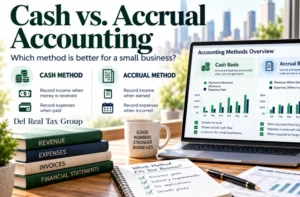
- Accrual Accounting: A method where income and expenses are recorded when earned or incurred (not when cash moves)
- Cash Accounting: A method where transactions are recorded only when money is received or paid
- Single-Entry Bookkeeping: A simple bookkeeping method where each transaction is recorded once (typically as income or expense), often used by very small businesses or freelancers
- Double-Entry Bookkeeping: A more advanced system where every transaction is recorded in at least two accounts (debits and credits), helping ensure accuracy and balance in financial records
- Cost of Goods Sold (COGS): The direct costs of producing or purchasing the products you sell
- Gross Profit: Revenue minus the cost of goods sold
How to Do Bookkeeping for a Small Business
Learning bookkeeping can help you set up a simple system, stay consistent, and focus on accuracy over perfection. The following steps can help you build a simple, reliable bookkeeping process to get you started.
1. Separate Business and Personal Finances
Start by opening a dedicated business bank account and, if possible, a business credit card. Keeping your finances separate makes it easier to track transactions, avoid confusion, and stay compliant during tax season, especially as your business grows.
2. Choose a Bookkeeping and Accounting System
Decide how you’ll manage your records. You can use a spreadsheet if you’re just starting, but most small businesses benefit from some type of bookkeeping software. These tools automate tasks like expense tracking, invoicing, and reporting.
3. Select an Accounting Method
Choose between cash accounting and accrual accounting. Cash accounting records transactions when money changes hands, while accrual accounting records income and expenses when they’re earned or incurred
Most beginners start with cash accounting because it’s simpler, but your choice may depend on your business type and growth plans.
4. Track All Income and Expenses
Record every financial transaction consistently. This includes:
- Sales and payments received
- Business expenses (rent, software, supplies, etc.)
- Fees, subscriptions, and miscellaneous costs
Missing even small transactions can lead to inaccurate financial reports over time.
5. Categorize Transactions
Organize each transaction into categories such as marketing, office supplies, payroll, utilities, etc. This helps you keep track of where your money is going and simplifies tax deductions.
6. Send Invoices and Monitor Payments
If you bill clients, create and send invoices promptly. Track which invoices are paid, unpaid, or overdue so you can follow up and maintain steady cash flow.
7. Reconcile Your Accounts Regularly
Compare your bookkeeping records with your bank and credit card statements (typically monthly). This helps catch errors, duplicates, or missing transactions.
8. Generate Financial Reports
Run basic reports to understand your business performance and business needs. You should regularly be looking at profit and loss statements, cash flow statements, and balance sheets to assess your business’s financial health and make the necessary decisions to run your business.
9. Store and Organize Financial Records
Bookkeeping 101 is staying organized with all receipts, invoices, and financial documents organized, preferably digitally. This ensures you’re prepared for tax filing, audits, or financial reviews and can simplify your bookkeeping at the end of the year.
When to Hire a Bookkeeper for Your Small Business
Building a good system is one of the most important steps in managing finances, especially when you’re first learning bookkeeping basics. In the early stages, many small business owners can successfully handle their own books with a simple, consistent routine. However, as your business grows, your financial needs often become more complex, and that’s when bringing in a professional bookkeeper can make a real difference.
If you find yourself falling behind on recordkeeping, unsure about categorizing transactions, or spending too much time managing your books instead of running your business, it may be time to outsource. To help, Del Real Tax offers a range of comprehensive bookkeeping services tailored to your needs. Book a demo with us today to learn more.